Category: news

  • Decluttering

    Decluttering

    Q: My house is going on the market and I want to declutter it for viewings. Where do I start? Suzy Kell, decluttering coach, offers her expert advice.

    A: Don’t panic! There’s a solution for everything. Decluttering the home will make it easier to prepare for viewings and the first step is to get rid of any large items you don’t want to keep. That might be an unused exercise bike or a chair you’ve never really liked, but it could also include things you’re not going to need in the new home. I once met a family who’d moved back from Canada along with all their skiing equipment. They were never going to need that in Ireland! Some of these items can be sold but there are also are many charities and online networks where you can donate things to people who need them. Landfill is a last resort. 

    The next step is to look at your home with fresh eyes. Walk through it as though you had never been there before and look for problem areas that catch the eye. We’re all in the habit of overlooking unsightly things that have always been there. Sometimes it helps to invite a friend to give their honest opinion. They might notice a tangle of wires dangling from the television, a misaligned shelf, or a messy corner. Locate the problem areas and deal with them. These may feel like small steps but nobody gets from zero to decluttered in a day.

    Once this is done, you’ll be feeling more in control and ready to get the home looking its best. I always vote for boxing things. Buy a supply of cardboard boxes, or get them for free from local shops, and begin to fill them in a logical way. Organise things into categories: toys; clothes; things belonging to the kids; things belonging to the dog; or paper. Then pack the boxes and label them by destination as well as by content. It’s as much a mental game as it is a physical one. If two outwardly identical boxes of books are marked: “books from the office” and “books from the playroom” it will help the movers to put them into the correct room. Think of this as doing a favour to your future self! A stash of neatly labelled boxes in the spare room will look as though you’re well organised for the move. It won’t be off-putting for viewers.

    Before you do the final packing, consider what you want to keep. My basic guideline is the 20:20 rule. If you can replace something for less than €20 in under 20 minutes, you don’t need to transport it. Cans of beans can go to the foodbank. What you bring with you will depend on how far you’re moving. If you’re moving abroad, the cost of transport will be calculated by weight as well as volume and this will narrow the options of what you can bring with you.  

    In the meantime, don’t pack away the things you need for daily life. If the house is becoming untidy (especially if you have small children) buy a laundry basket for each room. To prepare the house for a viewing at short notice, pick up anything that’s lying around, drop it into the basket, and close the lid. It’s a short term measure but very much quicker and easier than putting everything in its proper place. First focus on clearing the floors to create walkways around the home. Then clear the tables, countertops and beds. This will make the rooms easier to clean too.

    For more help with decluttering see suzykell.com. 
  • Decorating a New Build

    Decorating a New Build

    Q: I’m a first-time buyer about to move into my newly built home. I’m planning a phased approach to furnishing and decoration but I don’t know where to start. What do I prioritise? Interior designer Louise Johnston offers her expert advice.

    A: Plan, plan, plan! Use interior design magazines and platforms like Instagram and Pinterest to build up an idea of the colours, styles and textures you like. Think about how you want the home to feel and function for you. Look at the showhouse to see if there are any ideas you can steal! Floors are generally not included in new-build developments so choosing and installing the flooring will be your first priority. Do this before you move in and with a view to it being the foundation for the overall interior decoration scheme you will add over time. 

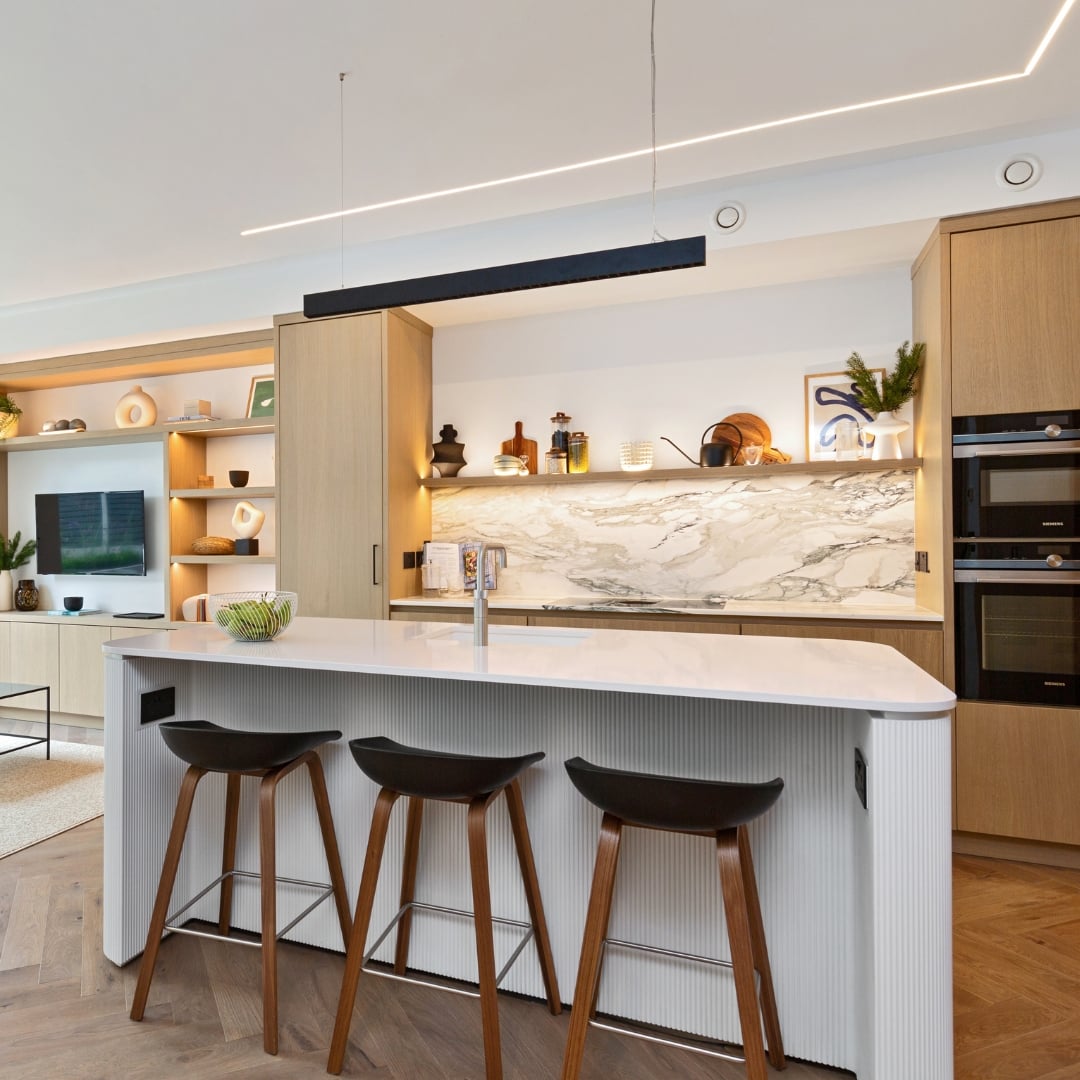
    Next, focus on the room you’re going to spend the most time in. This is usually the kitchen dining and living space. You may not have had a choice in the style of the kitchen. If you don’t love it, consider changing the handles on the units and adding tiles to the backsplash area between the countertop and the upper cabinets. It’s a small area, so it’s not crazy expensive to do and it will make the kitchen feel a bit more like you. If you have had your sights set on some open shelving in your kitchen, look into removing a wall cabinet or two to introduce some oak shelving where you can display your own dinnerware and decorative accessories. Essential furniture for the kitchen dining living space includes stools for a kitchen island or breakfast bar, dining table and chairs and a sofa. Add under-cabinet lighting – LED strips are inexpensive and easy to install – and lamps to create a warm, inviting atmosphere. 

    Then, relax and live in the space before you move onto other areas like a main living room or primary bedroom. Moving in is a big effort, there’s no harm in taking your time. It’s tempting to rush in with paint but it’s good to live in the house for a while and so you can see what the light is like at different times of day. It’s often worth booking an interior designer for a consultation. The cost is relatively small and it can save you money in the long term. Mistakes happen when people jump into a project too quickly or without having a plan in place.

    In the interim, you can continue to make some small changes to make the house feel your own. Hang some prints or paintings on the walls. Art that you’ve chosen is an expression of your personality and will quickly add character. If you’re afraid of damaging the plaster, picture hanging strips are widely available. Add greenery! Plants will quite literally bring life to the home!

    Consider leaving the primary bedroom relatively unfinished while you concentrate on the living area. Most of the time you’re in there you’re asleep! If you are saving up for a large storage unit, like a built-in wardrobe, you can buy some interim solutions like a hanging rail or baskets for clothing. It’s important to get storage organised early on. Misplaced possessions quickly become clutter, which is hard to shift. 

    The hallway is the first room you experience when you come in the front door. A simple console table with a mirror above it, a runner on the floor, and a piece of art on the wall will make it feel like home. Additional details like panelling can always be added at a later date.

    louisejohnstondesign.com

  • Summer Styling

    Summer Styling

    Q: My home is going on the market. How do I style it for summer viewings? Interior designer Natasha Rocca Devine offers her expert advice.

    A: Staging a home for viewings is a seasonal business and different things matter at different times of year. Summer is a sensual season and it’s particularly important to evoke all your senses. Take full advantage of the brighter longer days to show off your home at its best.

    When I’m preparing a home for summer viewings, my first priority is the window treatment. The windows will enhance the overall space, but the bright summer light will also show up anything that’s worn or dirty. Clean the windows and consider painting the window frames, even if you’re not painting the rest of the house. If the curtains are at all dirty, take them down and wash them or have them dry cleaned. If the blinds are dirty or broken, remove them. It’s often better to have no curtains or blinds at all than shabby ones.

    The second thing to consider is the garden, terrace or balcony. Have some kind of seating in place to show that the outdoor space is connected to the house, but a different zone. If there’s a lawn, mow the grass. It doesn’t have to be perfect! Just make it look like an interesting space that you’d want to be in.

    Thirdly, create a theme and style the home around it. There are different ways of doing this. Some people take a favourite movie and bring it to life with little touches around the house. Or, if it’s a seaside property, you could follow a beach house theme. The key is to pick a theme you can believe in. Look at what’s already in the house and create your story around it. For example, if you love plants and have lots of them around the home, you might consider a biophilic theme. That’s all about bringing nature inside with emphasis on plants, natural wood, natural fibres like linen and wool, rattan chairs, green throws, and artwork based on nature or landscape. Remember to tell your estate agent about your theme as it will help them to sell the property. It’s so exciting when you walk into a home and find there’s a story to go with it.

    Some people theme their home around a place they love to visit. This can be done subtly and with very little expense.  For example, if your theme is Italy, you might have a big jar of pasta and an Italian cookbook in the kitchen. Since summer is all about connecting I’d suggest you focus on the dining area and do a little tablescaping to help people imagine themselves into the space. That could be as simple as setting the table with espresso cups and a jar of biscotti. I always associate Italy with bright colours, so that might be expressed with one of two vibrant cushions or a runner on the table. Brightly-coloured flowers will really add a taste of Italy but fresh flowers need to be replaced regularly. Unless you’re prepared to keep doing this all summer, consider investing in some good quality silk flowers. Bunches of silk flowers from Dooro, and similar retailers, start around €100. They’re not the same as the real thing, but they look the part and will last you all summer. Other Italian details might include a print from a favourite Italian movie or a framed photograph of Italy. There’s no need to spend a lot of money. You can download a print for about €10 and buy a frame from JYSK or IKEA. Then play music that brings the theme together and light a candle that smells of Italy. But don’t overdo it. If each room has one piece relating to your theme – that’s plenty.

    In general, preparing a property for viewing, less is more. People will want to move around the home and you’re often better to take things out than to add new pieces of furniture. The permanent features – like the kitchen and the bathroom – should look as new as possible, but these can be combined with older vintage pieces. I like mixing old and new. It’s sustainable and it saves you money. Finally, not everyone can afford to move offsite for viewings. If you’re still living in the home, remember to make the beds as neatly as possible. You can’t go wrong with white sheets. Iron them, place a throw over the end of the bed, and add an accent cushion.

    People tend to overcomplicate styling. Keep it simple! Once the home is clean, fresh, and you can move around the space, that’s all the matters.The-Step-by-Step Guide to Designing & Styling Your Home (2023) by Natasha Rocca Devine is available to pre-order. See theinteriorsnrd.com